


Interview with Tony Whittred:
On-site installation for a BESS substation expansion
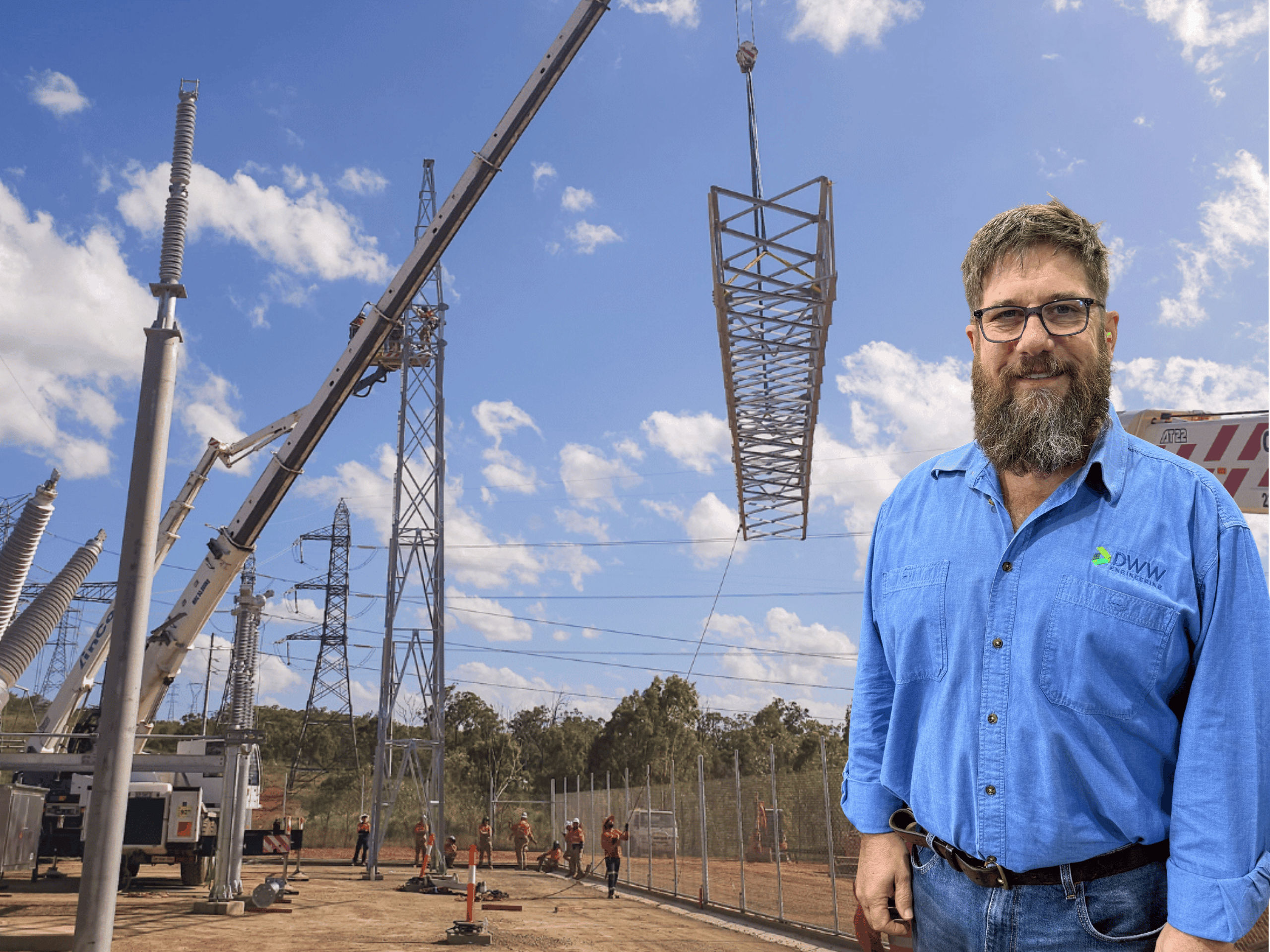
1) You went to site for this BESS substation expansion — what did you want to be there for?
“I like being there when we install large substation packages like this. You can do everything right in the workshop, but the last step is making sure the steel goes in exactly the way it’s meant to. For this project we supplied and installed a full substation steel package, so it made sense for me to be on site and support the team through the install. It also means the people who built it are right there with the people putting it in place, which keeps things straightforward.”
2) Before the first lift, what are you actually checking on site?
“We confirm the install sequence, check we’ve got the right assemblies in the right order, and make sure everyone is working off the same plan. With substation steel, alignment matters, so I’ll always look at the foundations and bolt set-out and compare that to how the structure has been packed and marked.”
3) This project involved two 24-metre lattice towers and suspension beams — how did DWW set the install up to run smoothly?
“The big thing was doing the work upfront. The towers and beams were fabricated to exact tolerances, then we pre-assembled the whole structure back at Darra in the workshop. That gave us confidence in the fit and alignment with the foundation bolts before anything left the workshop. From there, we delivered the components fully assembled and installed them on site.”
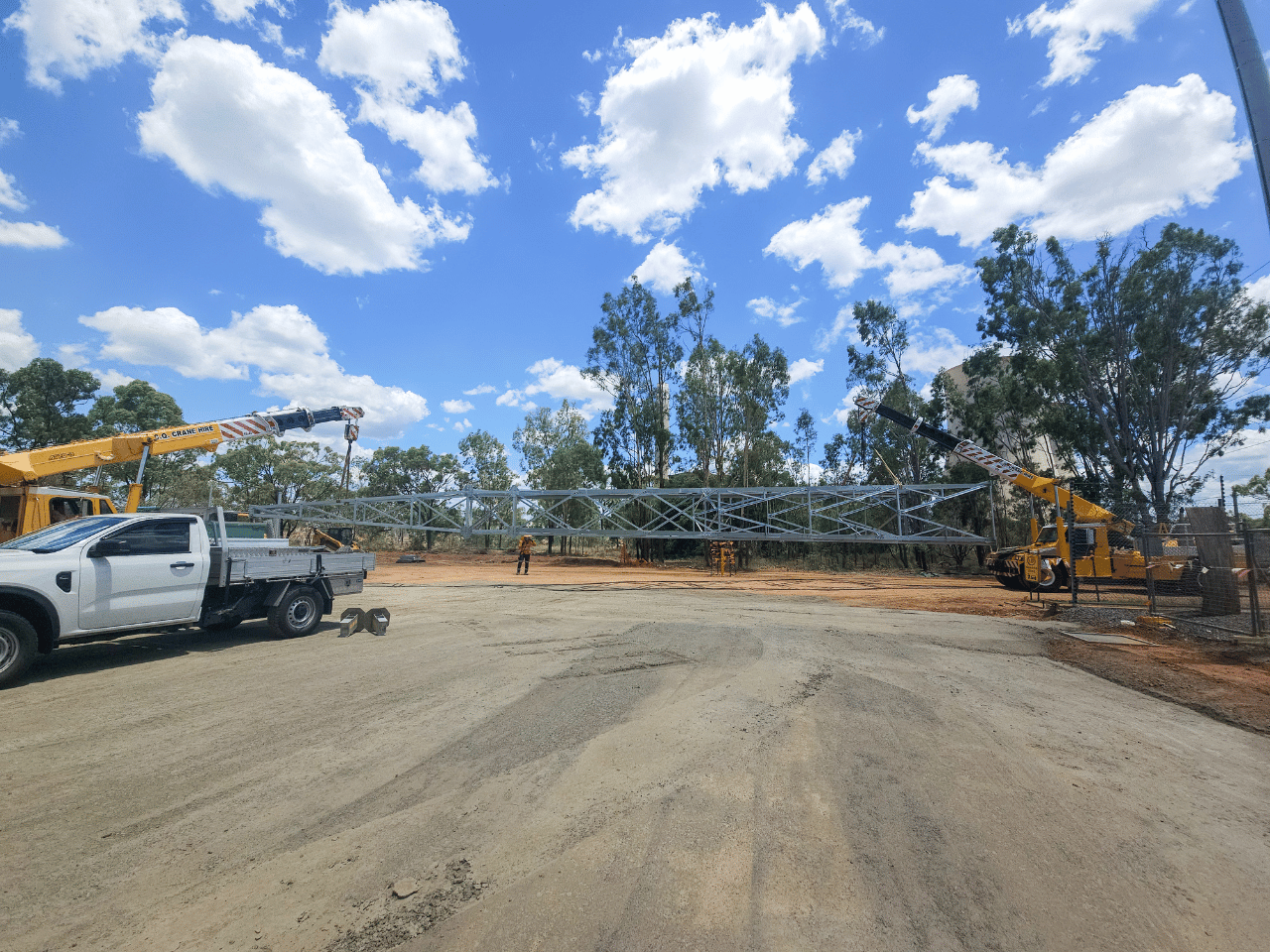
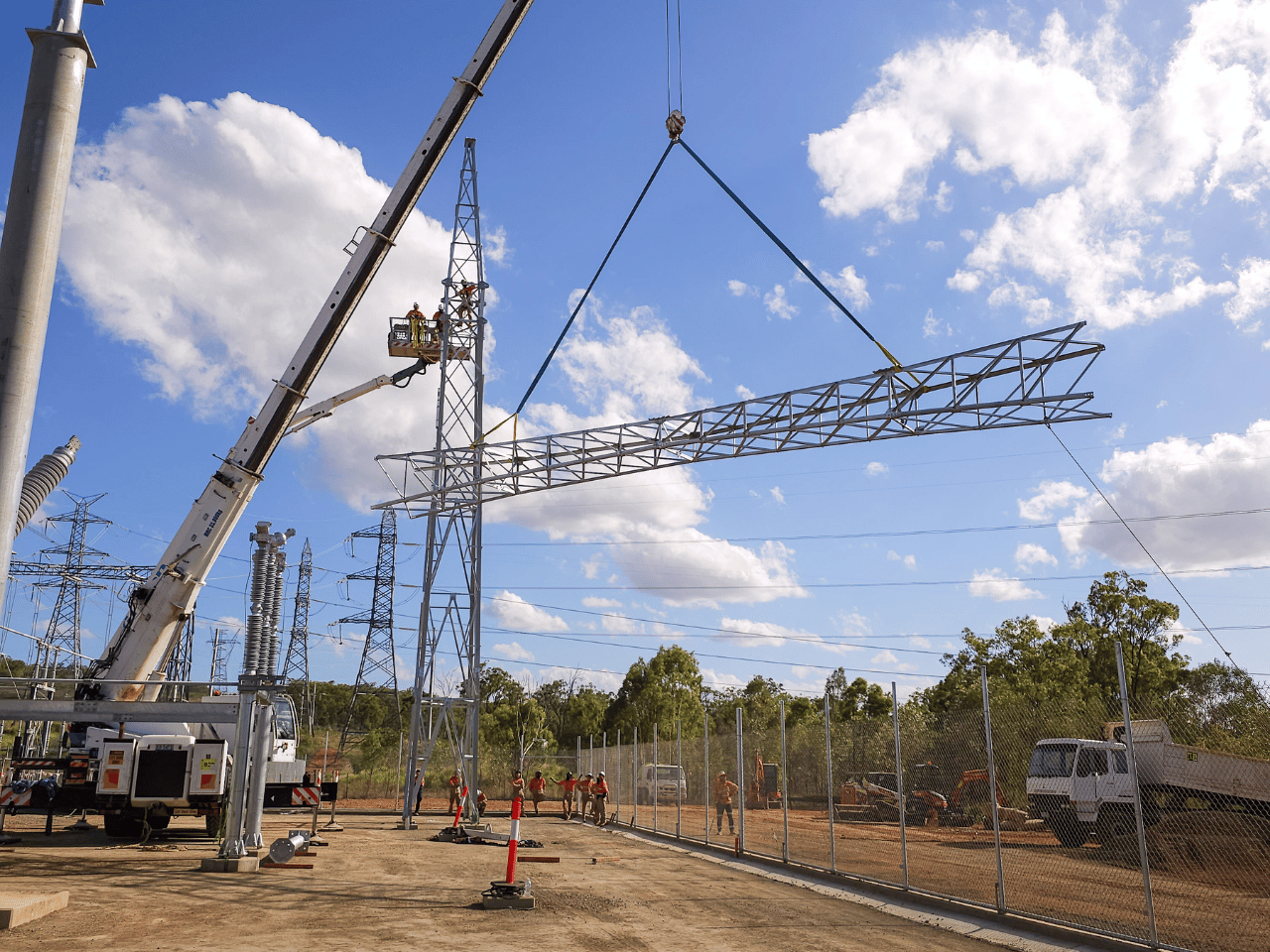
4) People often don’t realise that you go on site — why is that important for jobs like this?
“The big thing was doing the work upfront. The towers and beams were fabricated to exact tolerances, then we pre-assembled the whole structure back at Darra in the workshop. That gave us confidence in the fit and alignment with the foundation bolts before anything left the workshop. From there, we delivered the components fully assembled and installed them on site for the BESS substation expansion.”
5) What does a ‘good outcome’ look like on an install like this?
“A good outcome is simple: everything aligns the way it’s meant to, the install follows the planned sequence, and the team can bolt up and move on. On this project, we maintained exacting tolerances so the structure aligned with the foundations, and the job didn’t require rework on site. That’s what you want — a clean install and a smooth handover.”
6) What did the on-site day actually look like for you — how do you run an install like this?
“Usually I’m on site early, before anything starts moving, just to make sure we’re set up properly. I’ll walk the work area, check we’ve got the right assemblies staged in the right order, and confirm the lift plan with the crew and the wider site team. Once lifts start, it’s a mix of coordination and checking — making sure everything is sitting where it should, bolt-up is progressing the way we planned, and that the install sequence stays tidy.”
7) What’s one detail people don’t think about with transporting and installing tall lattice towers?
“A lot of the work happens before you even get to site. You’ve got to think about transport configuration, how it will unload, where it can be safely staged, and how each piece will be picked and oriented. The markings and pack order matter more than people realise — if it’s labelled properly, the crew can move quickly and confidently. For this job we broke the towers into separate assemblies for transport, then staged them on site in the install order so the lifts followed the sequence without any reshuffling.”