


Why Concrete and Steel Pedestrian Bridges Are the Go-To for Modern Bridge Design
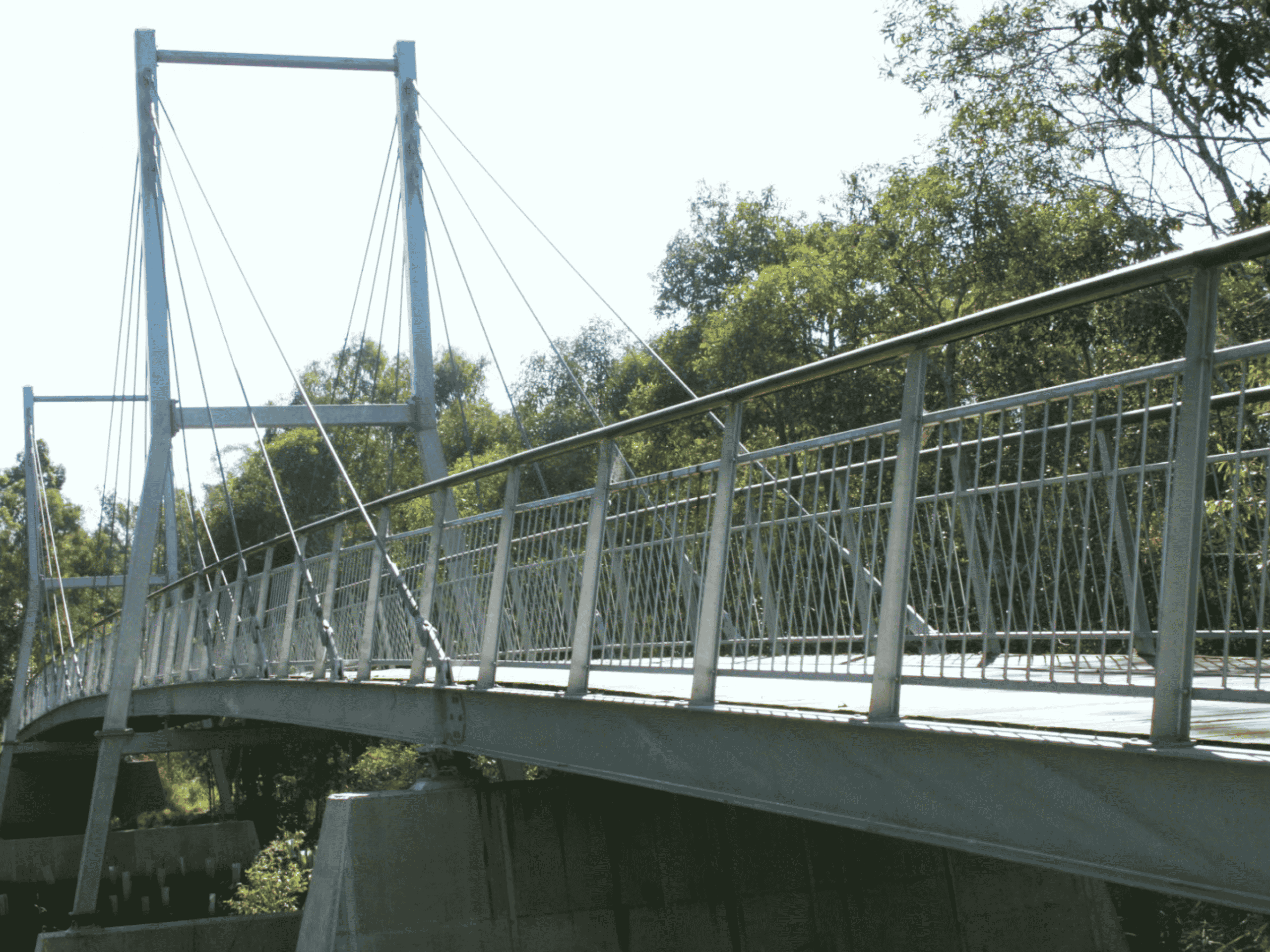
For modern pedestrian bridges, concrete and steel is a practical pairing. Concrete does its best work at ground level — durable, stable, and well suited to abutments and approaches. Steel does its best work across the span — lighter, efficient, and ideal for prefabrication and fast installation.
Used together, they deliver a bridge that meets structural needs and supports smoother delivery and long-term upkeep.
Concrete and steel: Each material earns its keep
Concrete and steel complement each other mechanically and practically.
Concrete typically suits abutments, approaches, and the “hard-working” zones near ground level where impacts, debris and day-to-day wear show up first. Steel typically shines in the superstructure: efficient spans, lower weight, offsite fabrication control, and straightforward bolted connections that support cleaner site planning.
When that interface between steel and concrete is detailed properly — bearings, cast-ins, anchors, edge details — the bridge becomes easier to install and easier to own.
Factoring in bridge maintenance
When people talk about low-maintenance bridges, they often jump straight to material choice. In practice, ongoing maintenance load usually comes down to geometry, drainage, and access.
An easy to maintain bridge starts with a simple aim: don’t give water, debris, and grime places to sit.
Practical detailing that makes a difference:
- Drainage and water shedding: avoid ledges and traps; detail so water runs off instead of pooling.
- Cleanability: keep surfaces accessible and straightforward to wash down, especially on flood- or debris-prone sites.
- Inspection access: make sure maintenance teams can inspect safely and efficiently, not as an afterthought.
Corrosion protection is another major driver of whole-of-life effort. Paint systems and galvanising can both play a role depending on the brief, exposure and public realm expectations.


Avoiding fit-up surprises for concrete and steel bridges
On site, steel fit-up issues rarely stay small. Misaligned holes, tolerance drift, and interface clashes can pause cranage, trigger redesign, and push works into new closures. If the bridge includes a steel-to-concrete interface (bearings, cast-ins, anchor groups, deck edge interfaces), it’s worth specifying early:
- The tolerance regime and how it will be measured
- When verification occurs (before coatings, after trial fit-up, pre-shipment)
- What happens if as-built concrete differs from design
This is also where in-house design and drafting support can remove friction — getting shop documentation aligned to the site reality and keeping the intent buildable through fabrication and install.
What this means for project managers selecting a steel fabricator
The bridge jobs that install cleanly are the ones where procurement and detailing lock down early:
- Responsibility boundaries (designer, fabricator, installer, coatings, bearings, concrete interfaces)
- Tolerance responsibility and verification method
- QA evidence and hold points at the right time
- Transport and lift constraints early enough to influence module breaks
DWW Engineering’s bridge delivery model is built around that end-to-end chain: in-house design and drafting, fabrication, transport and installation (including abutment works where specified).
A perfect pair: Concrete and steel bridges
Concrete and steel are the go-to pairing because they balance durability, efficiency and design flexibility without forcing owners into a high-maintenance outcome.
If you want a pedestrian or cycle bridge to be easy to maintains, focus less on “clever” materials and more on disciplined fundamentals: clean drainage, accessible inspection, controlled interfaces, and steelwork that fits first time.
If you’re planning a bridge and want steelwork that installs predictably and supports straightforward ownership, DWW Engineering is ready to talk through your scope, constraints and programme.
Contact us today to discuss your project requirements.